Most new guitar instruments are variations on something that already exists. The Verso Log is not. It's a lap steel that looks like it emerged from a product design school collaboration with a NASA contractor, promises an entirely new vocabulary for soundscaping, and is named "the Log" — which is either the kind of naming genius that ages perfectly or the result of a product meeting that ran too long and everyone just needed to go home.
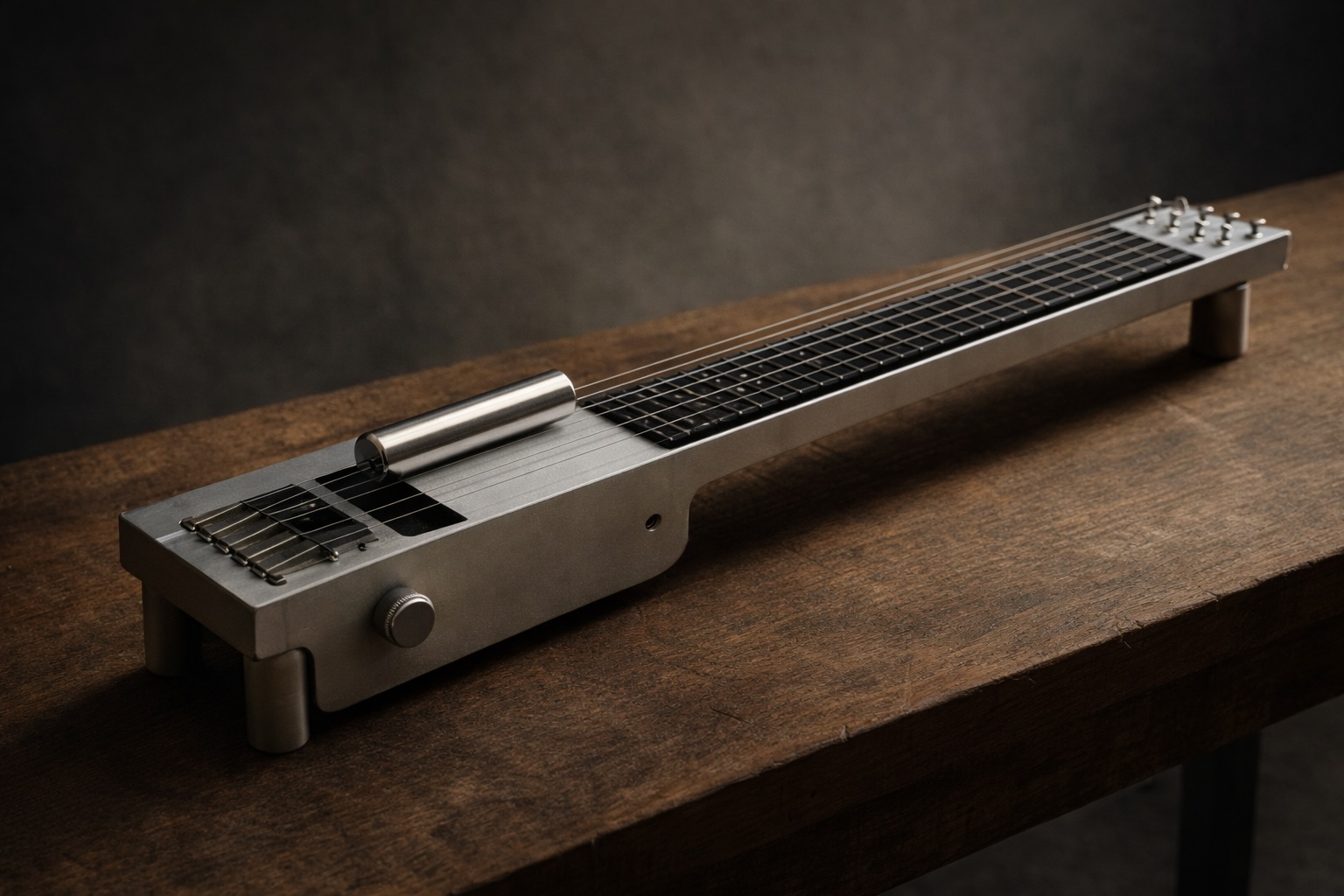
Verso released the Log with the claim that it would deliver "a whole new world of soundscaping," according to Guitar World's coverage. That is the sort of headline that makes skeptical guitar journalists reach for their notebooks, because instruments that promise to revolutionize something as old and specific as the lap steel usually don't. But Verso, whose whole design philosophy involves rethinking traditional string instruments from the ground up, at least has the right starting point.
What a Lap Steel Actually Does (Since Most of You Have Never Played One)
Here's the thing about lap steels: the vast majority of guitarists have never seriously played one, which is genuinely strange given how foundational the instrument is to so much music most people love. You rest it horizontally on your lap. You don't fret with your left hand — you slide a metal bar (the "steel" in lap steel) across the strings to change pitch. The tuning is typically open — common voicings include EBEG#BE or DGDGBD — which means the instrument has an entirely different harmonic logic than a standard guitar.
The resulting sound has this crying, singing quality that a regular guitar can only approximate with a slide. It's everywhere in blues, country, Hawaiian music, and ambient guitar — and it's almost never thought of as a "guitar" instrument even though it absolutely is. Pedal steels, which are the mechanically absurd evolution of the lap steel with levers and knee controllers that change pitch on individual strings, are the backbone of country music. Most rock guitarists couldn't name a pedal steel player. This is a gap in guitar culture that I find consistently baffling.
What Verso Is Claiming
The Log, as designed by Verso, pushes the lap steel toward new territory — both in its physical design and in the sonic vocabulary it's meant to open up. The instrument is built for soundscaping in a way that standard lap steels, designed around traditional country and Hawaiian music contexts, are not. Whether it delivers on that promise is something Verso will have to prove in the hands of players over time. "Delivers a whole new world of soundscaping" is a big sentence to back up.
What's interesting is the approach: instead of trying to build a better version of an existing instrument, Verso is asking what the lap steel could be if you designed it for different music entirely. That framing is legitimate, even if the outcome is still unproven.
Incidentally, Les Paul called his first homemade electric instrument "the Log" too. That is either tribute or coincidence. Les Paul's Log went on to influence every solid-body electric guitar ever made, so the naming precedent is at least historically respectable.
Why This Matters for Guitar Players
Most guitarists approach their instrument with a fixed idea of what "guitar technique" means — fretting with the left hand, picking or strumming with the right, standard tunings, barre chords as the first serious obstacle. The lap steel throws all of that out completely. There's no fretting. Your relationship with pick and attack completely changes — the bar controls pitch and the picking hand controls everything else: tone, vibrato, volume, articulation.
Playing a lap steel, even badly, tends to rewire how you hear pitch and slide technique in ways that feed back into regular guitar playing. It's not a detour from becoming a better guitarist. For some players, it's a shortcut.
Whether the Verso Log is the instrument that gets people to finally try a lap steel is unclear. It might be too design-forward to feel accessible, or it might be exactly the kind of object that a player who's been curious but intimidated by the traditional aesthetic finally picks up. Either way: the lap steel has been waiting for this moment. And most guitarists still don't know what they're missing.